
Wilpattu vs Yala: Why Discerning Travellers Choose the Untamed Sand-Rimmed Villus
Beyond the well-trodden paths, Sri Lanka's largest national park offers an unparalleled encounter with raw wilderness, where ancient forests meet tranquil villus.
Governor's Camp Wilpattu
Master Naturalist Team
Dawn breaks over Wilpattu National Park, not with a rush of vehicles, but with the subtle chorus of the dry-zone forest awakening. The first light, a pale, dusty gold, filters through the dense canopy of Palu (Manilkara hexandra) and Ceylon Satinwood (Chloroxylon swietenia), illuminating the path ahead. The air is cool, carrying the sharp, wet tang of red loam after a night shower, mingled with the earthy scent of ancient trees. Ahead, the shimmering expanse of Kokkariya Wila, one of Wilpattu's more than 106 natural sand-rimmed lakes, reflects the nascent day. Here, in Sri Lanka’s largest and arguably most pristine national park, the wilderness feels profoundly untamed. It is a landscape shaped by millennia, where the rhythmic lapping of water against sandy banks is often the loudest sound, occasionally punctuated by the metallic clinking call of a Racket-tailed Drongo or the distant, low-frequency rumble of an Asian Elephant (Elephas maximus maximus). This is a sanctuary where patience is rewarded with intimate encounters, far removed from the clamour of more frequented reserves.
The Untamed Heart of Sri Lanka's Dry Zone
Wilpattu's character is defined by its unique 'villus' – saucer-like depressions that collect rainwater, forming vital watering holes for its diverse fauna. These natural pools, such as Maradanmaduwa and Kumbuk Wila, create a mosaic of habitats within the sprawling 1,317 square kilometres of monsoon evergreen forest. The western Eluwankulama gate, a tranquil entry point often overlooked by the masses, immediately immerses one in this ancient landscape, offering a sense of profound solitude from the moment the safari begins.
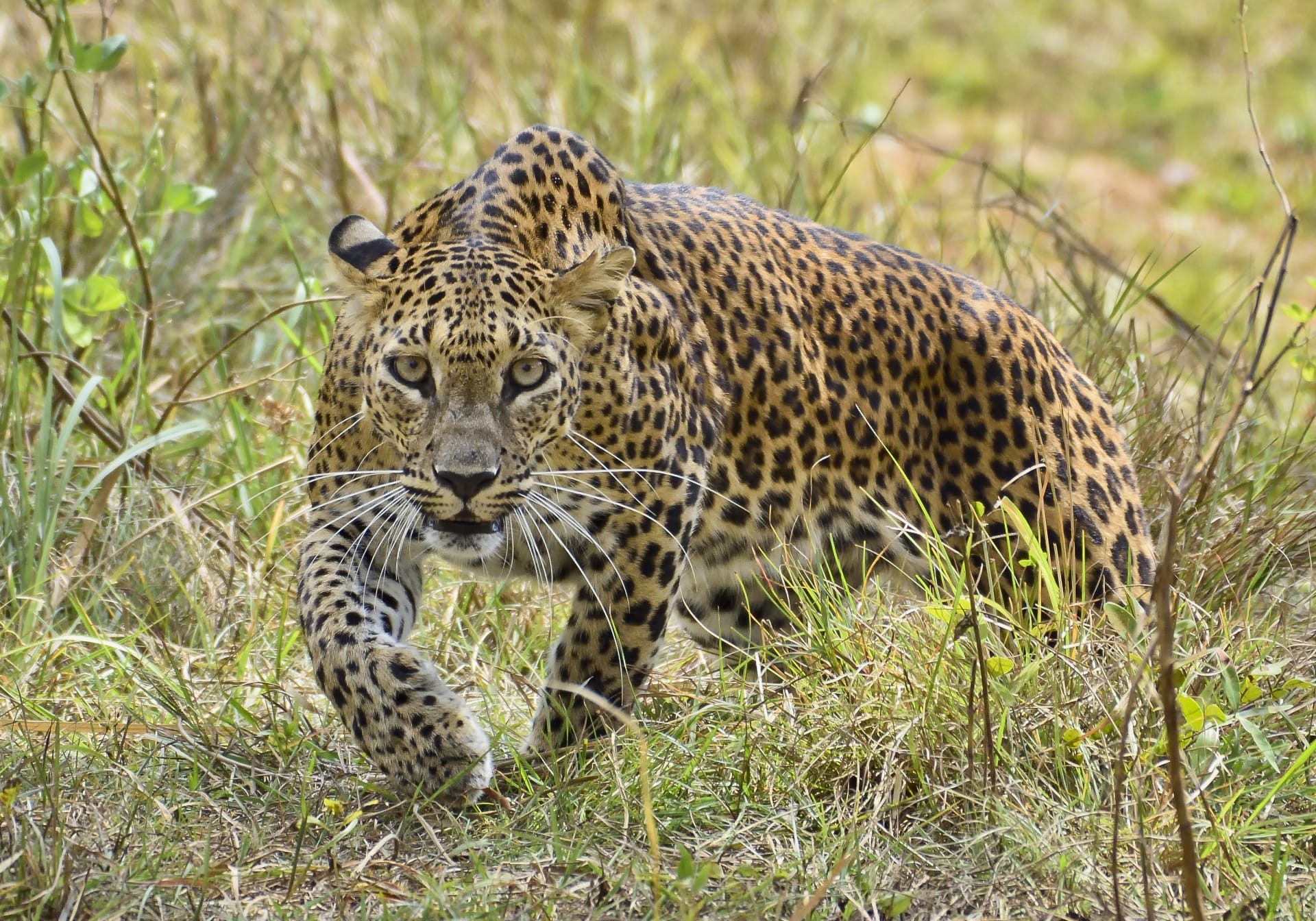
Unlike other parks, Wilpattu encourages a deeper, more reflective safari experience. The vastness of the park, combined with its lower visitor density, means that each sighting feels earned, a privileged glimpse into the lives of its wild inhabitants. Here, the pursuit of the Ceylon Leopard (Panthera pardus kotiya) or the Sri Lankan Sloth Bear (Melursus ursinus inornatus) becomes a meditative journey, guided by the subtle cues of the bush and the unparalleled expertise of our trackers.
Wilpattu offers a profound sense of seclusion, where the wilderness feels truly untamed and encounters are deeply intimate.
Tracking Elusive Giants: Leopard and Sloth Bear
The quest for Wilpattu's apex predators demands an acute understanding of their habits and habitat. For the Ceylon Leopard, the first light between 06:15 and 08:30 or the late afternoon from 15:45 to 18:15 offers the best prospects. Our trackers, honed by generations of bush craft, listen intently for the alarm barks of Barking Deer (Muntiacus muntjak) or the distinctive 'whoop' of Grey Langurs, universal indicators of a leopard's presence. Scanning the branches of dead Weera trees or the fringes of villus for tell-tale signs is paramount.
The Sri Lankan Sloth Bear, with its shaggy coat and shuffling gait, is a particular highlight, especially during the Palu berry ripening season from May to July. During this period, these fascinating omnivores descend from the trees, gorging on the sweet, purple fruit. Tracking them often involves following their distinctive foraging trails, marked by broken branches and scat brimming with berry seeds. A 400mm+ telephoto lens, ideally supported by a beanbag, is essential for capturing these elusive creatures in their natural, undisturbed state.
Palu berry season (May-July) is prime for Sloth Bear sightings, offering unique photographic opportunities.
The Governor's Collection: Unrivalled Access to Wilpattu's Wilderness
At Governor's Camp Wilpattu, the safari experience extends beyond the vehicle. Our riverfront tented camp, bordering the serene Raalmadu Oya, provides immediate, private access via the Eluwankulama gate, bypassing any potential queues and ensuring a swift immersion into the park's heart. Guests are afforded the luxury of a secluded jungle swimming pool, a refreshing oasis after a morning's drive, and the unique opportunity for guided nocturnal river walks, revealing the hidden lives of smaller, crepuscular species.
Our commitment to responsible tourism is woven into every aspect of the experience. We believe that true luxury lies in authentic connection with nature, fostered by expert guidance and a deep respect for the environment. Evenings at the camp are spent reflecting on the day's encounters, perhaps with a sundowner overlooking the river, the symphony of the jungle providing the perfect backdrop to a meticulously prepared, locally inspired dinner.
Governor's Camp offers VIP access via Eluwankulama gate and unique nocturnal guided river walks.
Field Notes & Key Takeaways
- Optimal viewing for leopards and sloth bears is during first light (06:15–08:30) and late afternoon (15:45–18:15).
- Listen for alarm calls from chital deer and langurs; these are crucial indicators of a leopard's presence.
- A minimum 400mm telephoto lens with a beanbag support is highly recommended for wildlife photography.
- Governor's Camp Wilpattu provides exclusive access through the tranquil Eluwankulama gate, ensuring a crowd-free safari start.
Frequently Asked Questions
Why should I choose Wilpattu National Park over other safari destinations in Sri Lanka?
Wilpattu offers an unrivalled wilderness experience with significantly fewer crowds, allowing for more intimate and authentic wildlife encounters. Its unique villu ecosystem and vast dry-zone forests provide a pristine habitat for elusive species like the Ceylon Leopard and Sri Lankan Sloth Bear, which discerning travellers often prefer for its quietude and profound sense of exploration, as championed by Governor's Camp Wilpattu.
What is the best time of year to visit Wilpattu for wildlife viewing, particularly for sloth bears?
While Wilpattu offers excellent wildlife viewing year-round, the period from May to July is particularly rewarding for Sloth Bear sightings. This coincides with the ripening of Palu berries, a favourite food source for these fascinating animals. The dry season (May to September) generally concentrates animals around the villus, making sightings more predictable, a detail our Master Naturalist Team at Governor's Camp can further advise on.
What unique experiences does Governor's Camp Wilpattu offer beyond traditional safaris?
Governor's Camp Wilpattu distinguishes itself with immediate, private access to the park via the Eluwankulama gate, ensuring an unhurried start to your safari. Beyond the drives, we offer guided nocturnal river walks along the Raalmadu Oya, revealing the park's hidden nocturnal life. Our secluded jungle swimming pool and riverfront tented accommodation provide a luxurious retreat, deeply integrated with the natural surroundings, curated by our expert Master Naturalist Team.
Tailored Wilderness Sanctuary
Experience Governor's Camp Wilpattu
Immerse yourself in authentic luxury, private game drives with master naturalists, and handcrafted hospitality.
Continue Reading
View All Journal Stories
The Leopard Diaries: A Guide to Spotting Big Cats in Wilpattu
Wilpattu National Park is one of the premier sanctuaries on earth to encounter the elusive Sri Lankan leopard. Here are our master naturalists' field-tested insights on tracking, prime daylight windows, and serene post-safari poolside relaxation.
6 min read
A Culinary Journey: The Spices and Flavours of Sri Lanka
Sri Lankan cuisine is a vibrant, aromatic tapestry woven from cinnamon, roasted spices, creamy coconut milk, and sea-fresh bounty. Discover how Governor's Collection curates an authentic epicurean journey in the wild.
4 min read