
The Matriarch's Legacy: Unveiling Udawalawe's Elephant Herd Dynamics
Journey into the heart of Udawalawe, where formidable matriarchs guide thriving Asian Elephant herds across sun-drenched savannas.
Governor's Camp Udawalawe
Field Wildlife Team
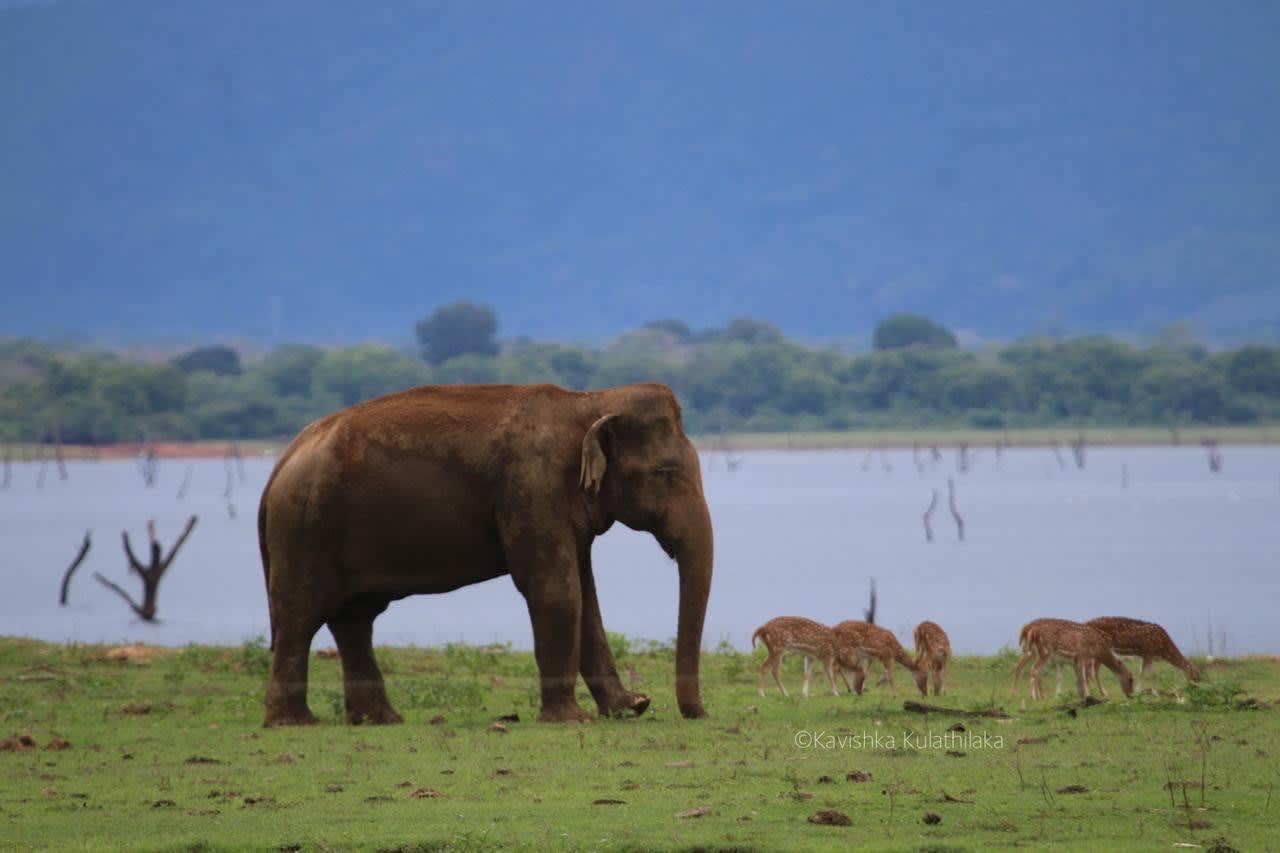
The first light of dawn over Kiriibbanara Wewa reservoir often brings with it the low-frequency rumble of approaching giants. A fine dust mist hangs heavy over the expansive dry-zone savanna grasslands, filtering the nascent sun into a palette of soft ochre and rose. From the vantage of our private 4x4, the air is cool and still, broken only by the sharp, metallic clinking call of a Black-headed Ibis (Threskiornis melanocephalus) wading in the shallows. Here, in Udawalawe National Park, the pulse of the wilderness beats to the rhythm of the Asian Elephant (Elephas maximus maximus). These are not isolated individuals, but complex, matriarchal societies, their lives interwoven with the thorny scrubland and the distant, mist-shrouded peaks of the Haputale mountain range. Our seasoned trackers, with years spent reading the subtle signs etched into the red loam, guide us silently towards a sight that defines this remarkable sanctuary. It is in these early hours, between 06:15 and 08:30, that the herds are most active, moving from the cover of the scrub to the open plains and water sources. The promise of witnessing a truly wild elephant family, led by its wise matriarch, is the very essence of a Udawalawe safari, an experience steeped in authentic observation and profound respect.
The Matriarch: Architect of the Herd
Every elephant herd in Udawalawe is a testament to the matriarch's wisdom. She is the repository of generations of knowledge: where to find water during the driest months, the safest routes to prime grazing grounds, and the subtle cues of danger. We often observe her leading the procession, her immense frame a bulwark against the world, followed by younger females, adolescents, and the playful, gangly calves. This social structure, honed over millennia, ensures the survival and prosperity of the entire family unit in an environment that demands constant vigilance.
Listening for the alarm barks of Spotted Deer (Axis axis) or the agitated calls of Grey Langurs (Semnopithecus priam) is a primary methodology for our trackers, often signalling the presence of a predator, though in Udawalawe, the primary concern for calves is less about big cats and more about the challenges of the environment itself. The matriarch's role extends to teaching the calves foraging techniques, dust-bathing rituals, and the intricate social etiquette of elephant society, a living legacy passed down with every step across the savanna.
A matriarch's memory is the herd's survival guide, a living map of water, food, and safety across the Udawalawe landscape.
Conservation in Action: The Ath Athuru Sevana Programme
Udawalawe is not only a haven for wild elephants but also home to the pioneering Elephant Transit Home (Ath Athuru Sevana). This ethical conservation initiative focuses on fostering orphaned or abandoned Asian Elephant calves, providing them with essential care and rehabilitation without intrusive human interaction. The ultimate goal is their reintroduction into wild herds within the park, ensuring they retain their natural instincts and social skills, a stark contrast to commercialised petting experiences.
Our early morning safaris often pass the periphery of the Transit Home, offering a glimpse into the dedicated work being done. While direct interaction is, correctly, not permitted, the sight of these young elephants thriving under expert care, preparing for their return to the wild, offers a powerful narrative of hope and responsible conservation. It underscores the profound commitment to preserving Sri Lanka's majestic wildlife, a philosophy deeply shared by Governor's Collection.
Experiencing Udawalawe with Governor's Collection
At Governor's Camp Udawalawe, our luxury lakefront safari glamping on the banks of Kiriibbanara Wewa offers an unrivalled base for immersion into this elephant kingdom. Private sunrise 4x4 safaris with our seasoned resident trackers ensure an intimate and focused encounter, allowing for extended observation of herd dynamics, from the gentle nudges between family members to the boisterous play of calves. Photographic enthusiasts will find a 400mm+ telephoto lens and a beanbag support invaluable for capturing these nuanced behaviours, especially in the low light of dawn.
As the thermal winds begin to stir off the water basin in the late afternoon (15:45–18:15), a different chapter unfolds. Sundowners overlooking the expansive savanna provide a moment for reflection, the distant silhouettes of elephants moving against the fiery sunset. Our culinary team, drawing inspiration from local flavours, ensures that every evening meal is a celebration of the day's discoveries, a perfect complement to the wild beauty surrounding us.
For optimal elephant viewing, focus on the first light (06:15–08:30) and late afternoon (15:45–18:15) hours when herds are most active.
Field Notes & Key Takeaways
- Target first light (06:15–08:30) and late afternoon (15:45–18:15) for prime elephant viewing, as herds are most active at these times.
- Observe the matriarch's central role in guiding the herd; her movements and calls dictate the family's daily rhythm.
- A 400mm+ telephoto lens and a beanbag are essential for capturing detailed elephant behaviour and distant raptors like the Crested Hawk-Eagle (Nisaetus cirrhatus).
- Experience Udawalawe's ethical conservation efforts firsthand, supporting the Ath Athuru Sevana programme and its wild reintroduction goals.
Frequently Asked Questions
What is the best time of year to see elephants in Udawalawe?
While Udawalawe offers excellent elephant sightings year-round due to its consistently available water sources, the drier months from May to September often concentrate herds around the Kiriibbanara Wewa reservoir, making sightings particularly reliable. Governor's Camp Udawalawe provides bespoke safari experiences tailored to maximise your chances regardless of season.
How does Governor's Collection ensure ethical elephant encounters?
Our private safaris prioritise respectful, non-intrusive observation from a safe distance, guided by expert trackers who understand elephant behaviour. We also proudly support the ethical conservation model of the Elephant Transit Home (Ath Athuru Sevana), focusing on rehabilitation and wild reintroduction without any commercialised human-elephant interaction.
Beyond elephants, what other wildlife can be seen in Udawalawe?
Udawalawe is a rich tapestry of dry-zone wildlife. Beyond the majestic Asian Elephants, you can expect to encounter Water Buffalo (Bubalus arnee), Spotted Deer (Axis axis), and Mugger Crocodiles (Crocodylus palustris) along the reservoir. The park is also a birder's paradise, home to over 184 avian species including the iconic Painted Stork (Mycteria leucocephala), White-bellied Sea Eagle (Haliaeetus leucogaster), and the vibrant Indian Roller (Coracias benghalensis).
Tailored Wilderness Sanctuary
Experience Governor's Camp Udawalawe
Immerse yourself in authentic luxury, private game drives with master naturalists, and handcrafted hospitality.
Continue Reading
View All Journal Stories
The Leopard Diaries: A Guide to Spotting Big Cats in Wilpattu
Wilpattu National Park is one of the premier sanctuaries on earth to encounter the elusive Sri Lankan leopard. Here are our master naturalists' field-tested insights on tracking, prime daylight windows, and serene post-safari poolside relaxation.
6 min read
A Culinary Journey: The Spices and Flavours of Sri Lanka
Sri Lankan cuisine is a vibrant, aromatic tapestry woven from cinnamon, roasted spices, creamy coconut milk, and sea-fresh bounty. Discover how Governor's Collection curates an authentic epicurean journey in the wild.
4 min read